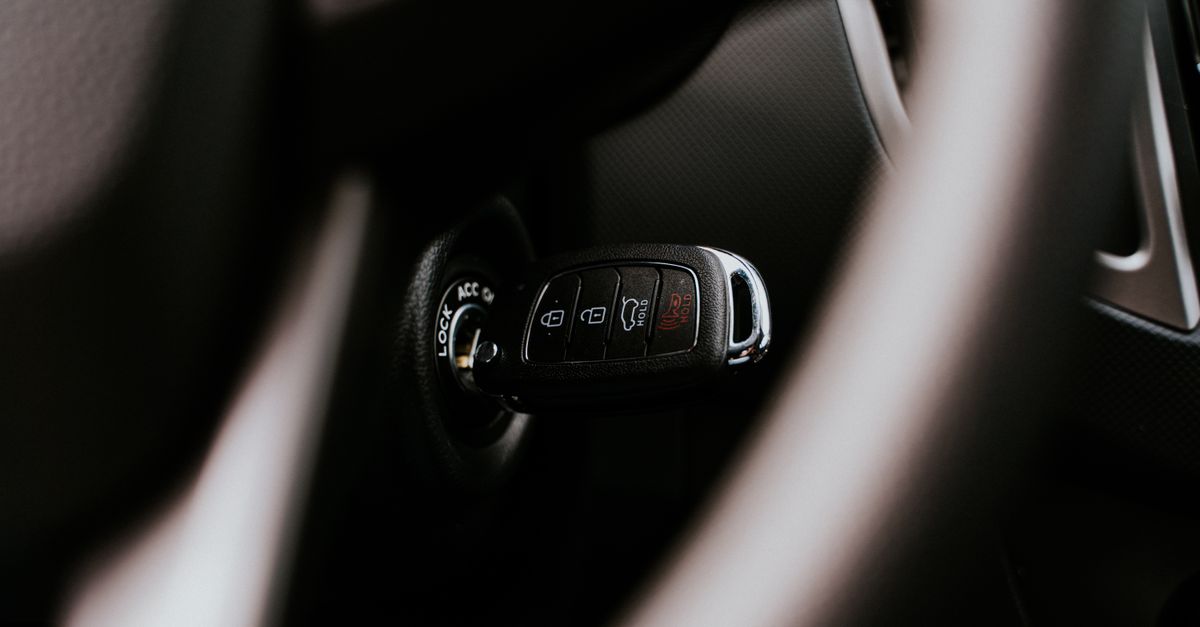

What Transponder Keys Actually Do — and Why Programming Matters
Every transponder key contains a small passive RFID chip embedded in the plastic head of the key. When you insert the key and turn the ignition, the car's antenna ring — located around the ignition cylinder — sends a radio frequency signal to the chip. The chip responds with a unique rolling code or fixed code that the vehicle's Engine Control Unit (ECU) cross-references against its authorized list. If the codes match, the immobilizer disengages and the engine starts. If the chip is absent, damaged, or not programmed to that specific vehicle, the immobilizer stays active and the car won't start, even if the blade cut is mechanically perfect. This is why a hardware store key copy that looks identical to your original will not start your car — the blade may be right, but the chip has never been introduced to your vehicle's ECU.
Programming requirements vary significantly across manufacturers and model years. Some vehicles allow what's called on-board programming, where a trained technician follows a timed key-turn sequence using existing working keys. Others — particularly later-model vehicles from European and Japanese manufacturers — require a direct OBD-II port connection and manufacturer-level software to write a new key to the ECU. A small number of vehicles require the ECU or immobilizer module to be accessed more directly. Our technicians carry both the diagnostic hardware and the software licenses to handle all three scenarios, which is why we can often get a New York driver back on the road the same visit rather than the same week.